Understanding Colocation in Los Angeles
As businesses increasingly rely on digital infrastructure, the significance of colocation services—where companies can house their servers in third-party data centers—grows exponentially. In Los Angeles, a city that serves as a pivotal internet infrastructure hub, organizations have access to state-of-the-art facilities and invaluable connectivity options. This article delves into the dynamics of colocation in los angeles, addressing what it entails, the strategic advantages of this location, and the offerings of various service providers within the region.
What is Colocation and Why It Matters?
Colocation refers to the practice of housing privately owned servers and networking equipment in a third-party data center. This arrangement provides businesses with access to superior resources without the large capital expenditure associated with building and maintaining their own data center. Instead of investing in hardware, cooling systems, and security protocols, companies can focus on their core operations while leveraging the infrastructure offered by colocation facilities.
The Strategic Importance of Los Angeles in Global Networking
Los Angeles holds a unique place in the global networking landscape. It is the primary terminus for numerous trans-Pacific submarine cables, connecting North America with key markets in Asia, such as Japan, South Korea, and Australia. This geographical advantage translates into reduced latency and enhanced speed for companies whose operations span these regions. In essence, for businesses that engage with the Asia-Pacific market, utilizing colocation services in Los Angeles is paramount for performance and reliability.
Key Players in the LA Colocation Market
Several major players dominate the Los Angeles colocation market, including Equinix, CoreSite, and Digital Realty. Each of these providers offers unique services and facility features that cater to different business needs. Their data centers are equipped with high capacity, robust security, and excellent connectivity options, making them attractive choices for companies seeking colocation solutions in this dynamic region.
Benefits of Choosing Colocation Services
Cost-Efficiency and Scalability Advantages
One of the most significant benefits of colocation is cost efficiency. By sharing space and resources, businesses can significantly reduce their operational expenses. Moreover, colocation allows for scalability; as companies grow, they can easily expand their operational capacity without needing to invest in additional infrastructure. This agility is essential for businesses that operate in fast-paced environments.
Enhanced Security and Compliance in Data Centers
Data security is a major concern for businesses today. Colocation providers often have stringent security protocols in place, including 24/7 monitoring, fire suppression systems, and biometric access controls. Furthermore, many data centers are designed to comply with various regulatory frameworks, ensuring that businesses can meet compliance requirements such as GDPR and CCPA.
High-Availability and Disaster Recovery Solutions
Colocation facilities are built with redundancy in mind, offering high availability and disaster recovery solutions. In the event of a power outage or system failure, colocation services ensure that businesses can quickly recover their operations with minimal downtime. This reliability is crucial for companies that require constant access to their data and applications.
Colocation Services Offered by Reboot Monkey
Overview of Remote Hands and Smart Hands Services
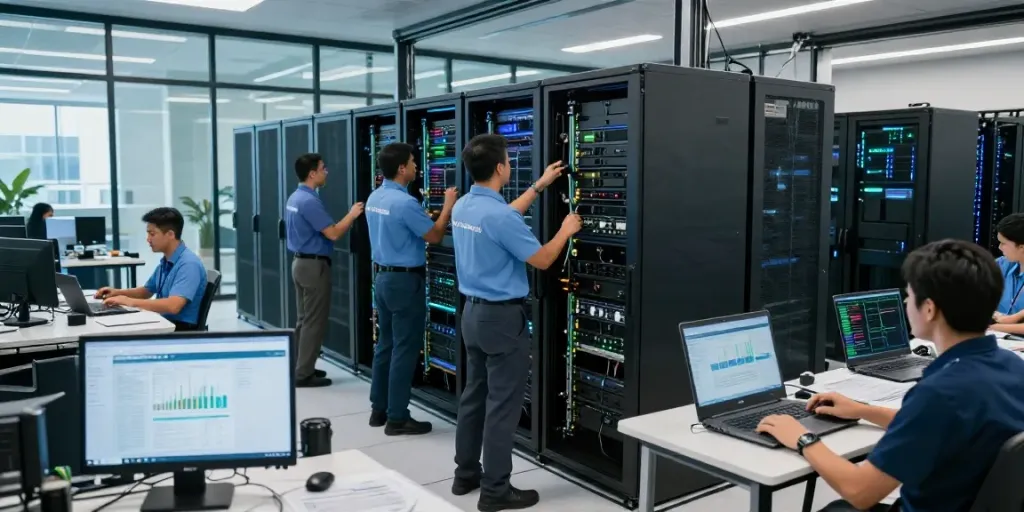
Reboot Monkey provides comprehensive technical support through its Remote Hands and Smart Hands services. Remote Hands services involve basic tasks performed by technicians on-site, such as resetting equipment or performing routine inspections. In contrast, Smart Hands services are more advanced, involving activities that require higher technical skills, such as firmware upgrades and troubleshooting under remote direction. This suite of services enhances the operational efficiency of colocated equipment in various facilities.
Data Center Migration and Decommissioning Processes
Reboot Monkey excels in facilitating data center migration, ensuring that businesses can smoothly relocate their operations without disruption. This service includes everything from the physical removal of equipment to transport coordination and post-migration verification. Additionally, the company offers CCPA-compliant hardware decommissioning, including secure data destruction and documentation for regulatory audit purposes, which is critical for businesses in heavily regulated industries.
Physical Support and Technical Assistance
Beyond migration and decommissioning, Reboot Monkey provides on-site technical assistance tailored to the unique needs of each client. Their expert technicians are available for routine maintenance as well as out-of-hours support, offering services such as cable management, hardware inspections, and other structured tasks that require specialized knowledge. This support is invaluable for businesses that may not have the resources to maintain a full-time IT team on-site.
Pricing and Expectations for Colocation in Los Angeles
Factors Influencing Colocation Costs
Colocation pricing in Los Angeles is influenced by several factors, including the level of service provided, the type of facility, and the specific location within the metro area. Generally, premium facilities that offer enhanced security and connectivity options may command higher prices. Additionally, the size of the space and the resources utilized will also determine the overall cost for businesses seeking colocation services.
Comparative Analysis of Pricing in Major US Cities
When comparing colocation pricing in Los Angeles to other major US cities, it’s essential to consider factors such as local demand, real estate costs, and infrastructure availability. Los Angeles remains competitive, especially given its strategic advantages for businesses requiring connectivity to Asia-Pacific markets. As the colocation market continues to evolve, pricing strategies may adapt, reflecting both regional trends and global demands.
Future Trends in Pricing Strategy for Colocation
Looking ahead, several trends may influence colocation pricing strategies. The ongoing expansion of cloud services, coupled with advances in technology, could lead to shifts in how colocation services are structured and priced. Providers may also explore flexible pricing models that better cater to varying customer needs, promoting an environment of growth and innovation in the marketplace.
Frequently Asked Questions
Which Los Angeles data centers does Reboot Monkey cover?
Reboot Monkey operates across all major Los Angeles colocation facilities, including Equinix LA1 through LA4, CoreSite LA1 through LA3, and One Wilshire. This extensive coverage allows businesses to access a wide range of services tailored to their needs.
What is the on-site response time for colocation support?
Reboot Monkey is committed to providing efficient service, with on-site response times typically ranging from 30 minutes to 2 hours, depending on the urgency of the issue and the specific facility involved.
How does Reboot Monkey ensure CCPA compliance in services?
Reboot Monkey adheres to CCPA guidelines by implementing strict data management practices. This includes secure data destruction processes, proper chain-of-custody documentation, and the ability to provide certificates of destruction for compliance purposes.
Can Reboot Monkey assist with equipment at One Wilshire?
Yes, Reboot Monkey is fully equipped to manage and support colocated equipment at One Wilshire, providing the same level of service and expertise as at other facility locations.
What are the benefits of colocation for entertainment businesses?
For entertainment companies, colocation offers enhanced connectivity to global networks, improved data security, and the reliability needed for content distribution and large-scale production operations. This is especially important given the industry's reliance on real-time data and access to high-capacity infrastructure.